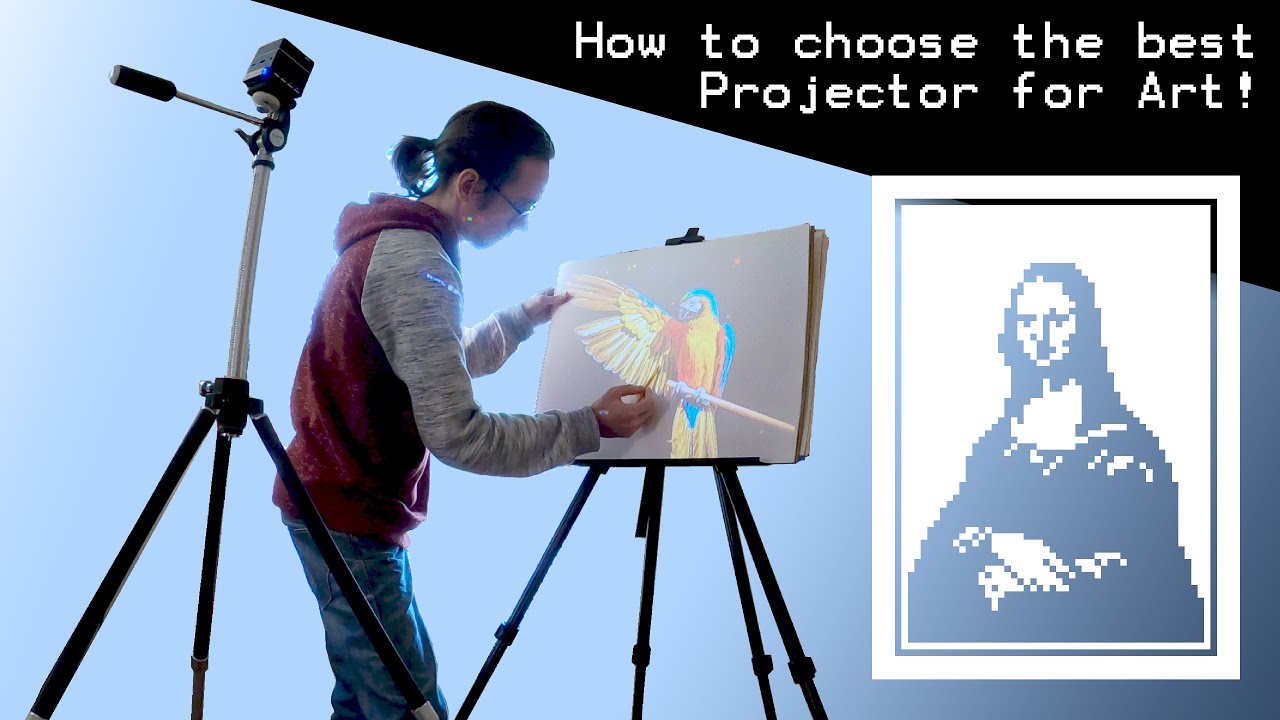
Turn your art ideas into reality with a tracing projector. You enjoy drawing, but you have some difficulties with detail.
Imagine if there was something that could facilitate a seamless reflection of your thoughts. A projector for art tracing might be what you’re looking for. It’s specifically designed to enable you to project details of your design on this surface so that you can more closely trace curves and lines while also exerting pressure on the tip of the pen for maximum detail capture.
View Details On Amazon

Having this equipment, you can just let loose and hone your art in cool and new ways! Then tracing is rapidly integrated into your creative pipeline, and you will never struggle again. Apparently, a projector can completely change how you do art tracing. Good luck, and I hope you can determine what features matter to you and make up your mind based on them. Ready to elevate your artistry? Now, let’s open the rabbit hole of art tracing projectors!
Finding the Best Projector for Tracing Art
The Best home projectors for art tracing can take you into another world when inspiration is low. With plenty of options out there, it can be hard to find which one’s for you. A projector eases an artist’s task of transposing designs onto surfaces in the right proportion. When making your decision, it helps to know what types of projectors are available and what options they provide.
What are The Types of Projectors for Art Tracing
There is a wide variety of projector types to choose from. Both come with their own pros and cons for tracing art.
LCD Projectors: Are cheap and common. They are equipped with liquid crystal display technology for clear commentary. They work amazingly in rooms with lots of light.
DLP Projectors: Digital Light Processing projectors provide crisp and colorful images. They are lightweight and portable. Ideal for artists who travel.
LED Projectors: LED projectors have a long lamp life. They are long-lasting and generate bright colors. Best for detailed art projects.
Main Features to Consider in a Projector for Art Tracing
Compare key features when choosing a projector. These functions can have an effect on your tracing of art.
Resolution: High resolution for detail, clear projection. You will start to lose fine details at anything less than 720p.
Brightness: Check the lumens rating. The more the lumens, the better the visibility in lit spaces.
Portability: Projectors that are lightweight and small are easy to move. Think about this if you need to work in multiple places.
Connection: Make sure the projector has a variety of input connections. Here, HDMI, USB, and wireless connections are important for flexibility.
Throw Ratio: Determines the size of the image from a particular distance. Short throw ratio makes it good for use in small rooms.
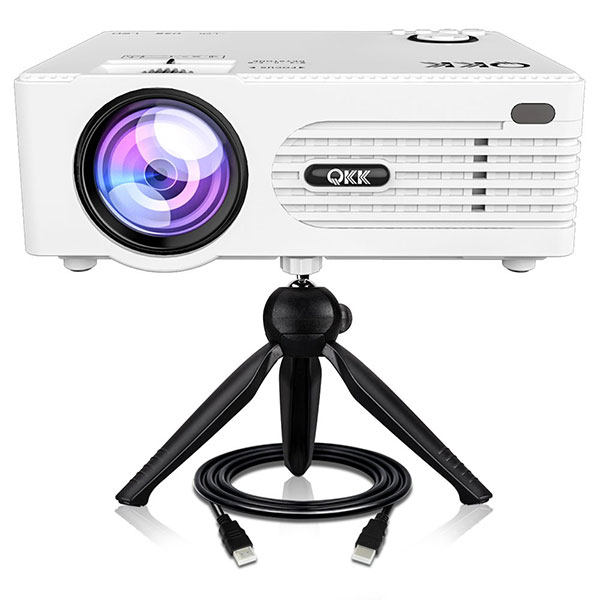
Positioning Your Projector for Art Tracing Workspace
It’s essential to prepare your workspace for art tracing with a projector. Allows you to work on the fun part. A clean workplace saves your time and improves work efficiency. It also minimizes distractions. This part will instruct you on how to set up the optimal environment for tracing art.
Optimal Lighting Conditions
Art Tracing needs good lighting. Decrease the lighting in the room a little bit so you can see the projector better. Keep your tracing surface out of direct sunlight. Soft, ambient lighting works best. It reduces glare and shadows. Consider adjustable lamps or curtains. They make it simple to channel the light.
Positioning The Projector
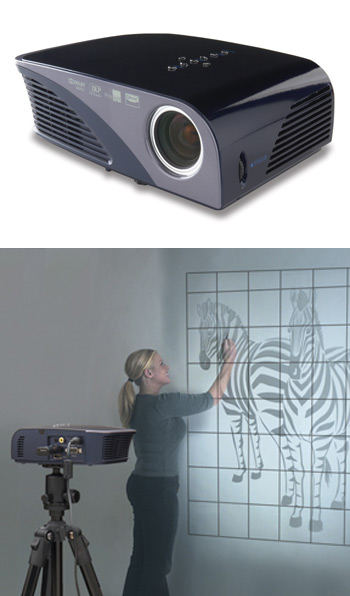
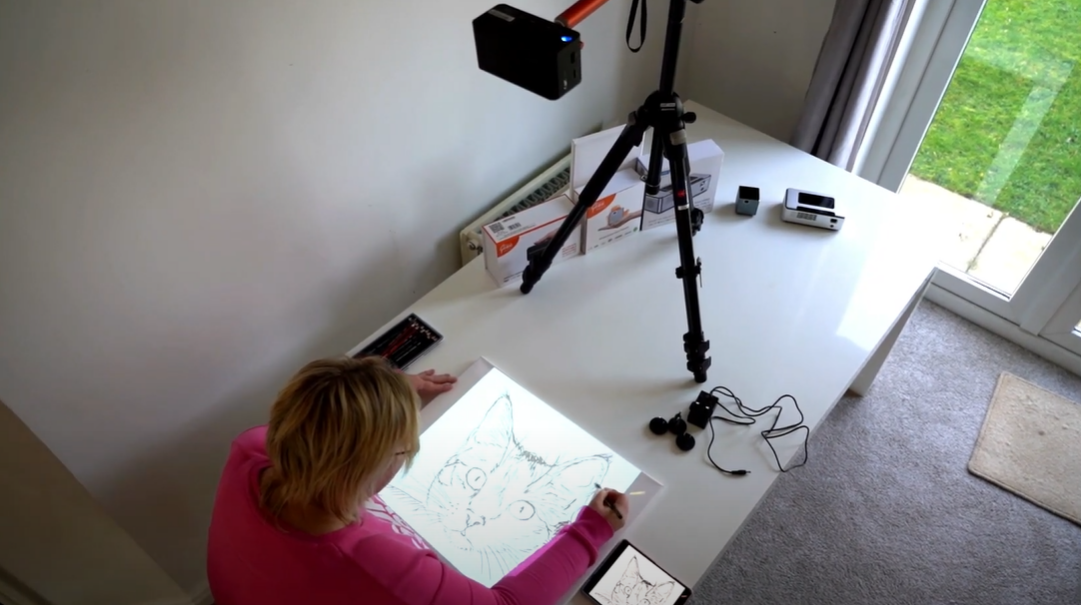
Good projector placement is essential for faithful tracing. Set the projector to a distance suitable for your surface. Make sure you see the video image covering your full workspace. You can even change the angle & height to allow for perfect line up if the camera is mounted diagonally (see image #4)! Place the projector on a smooth surface. This suppresses movement and stabilizes the image.
How to Prepare Your Art for Projector Art Tracing
Projecting art to trace cuts out a lot of prep time! Projectors project your design onto any surface. This is particularly useful as it has a great advantage in reducing time and labor in accurate replication. Designed for artists who demand vibrant color and consistent results.
Preparing Your Artwork: Preparing your artwork to be traced can be a part of the creative process and quite enjoyable. Even though some of the magic is gone, like drawing on a massive piece of paper, you can get away with more life-sized art without it looking too simplistic. Regardless of your level of experience, preparing your art properly can be the difference between struggling through or finishing a piece smoothly. So let’s get into some physical practices to help you be prepared for battle!
Selecting Images For Tracing
And, of course, selecting the right image is key. Consider what motivates you and what you want to communicate with your work. And think of the image as complicated. Less-complicated designs are quicker to follow, and you save time. Would you like to paint a landscape, a portrait, or maybe even an abstract artwork? The choice is yours. It is also important to choose high-contrast images. This means that tiny details are not lost when projected.
Digitizing Your Art
How do you convert your selected image to a digital format? And this is not as difficult to do as it might sound. Scan your artwork, or take a high-resolution photograph. This is helpful to your trace quality and precision work. Software such as Photoshop or a free alternative such as GIMP can help give your images an extra boost. Bring brightness and contrast to an optimal balance to facilitate your tracing process. Now that it’s digitized, you can edit your image to be exactly what you had in mind. Crop, rescale, or add the elements that will make your art seem real. Ensuring your artwork is trace-ready isn’t just a matter of following technical steps; it’s setting the scene for that flow to arrive. As an artist, are you ready for a change?
How to Use Your Art Tracing Projector the Right Way for Clear and Sharp Drawings
Designers will often project an image onto paper (or some other material) and trace it. These aids assist with scaling and transferring accurate images. The process is made easier by projection techniques, which enable intricate and sharp art.
In art making, tracing can save you time and be used as a means of invention. Projectors are necessary for any artist who desires to project images onto a wall to use as templates. But just how do you get the right results when it comes to perfecting the art of projection? Now, let’s take a look at some of the essential things you can do to enhance your art tracing journey.
Scaling And Resizing
You must know how to scale your image down or up. The goal is for the image to fit within the area you’re concentrating on, but not at the expense of valuable details. With most projectors, you can adjust the image size from the settings. Hopefully, your image projection area is some sort of rectangle. This will help you with your projector set-up. Just make sure the image is scaled correctly so that no distortion takes place, preserving your work. Have you ever had a problem with scaling? You may want to use a proportional grid method between the original image and your canvas. It’s a small thing, but it can make a big difference in getting the perfect size.
Focusing And Clarity
Another very important step is to focus your projector. If an image is fuzzy, it can cause mistakes when the image is traced, which means wasted time and money. Hang the projector at an appropriate distance from your canvas. Turn on the focus adjust function and make the image clear so that lines and details do not blur.
Lighting is also a significant factor when it comes to clarity. Darken your workspace just a tad for better projection, but use enough light to see what’s on your bench! Stay away from bright lighting that can bleach the image. You’ll simply be tracing better by balancing focus and light. Have you never attempted to project in a light room? It’s tough, but with a few minor tweaks, you can increase projection quality greatly. Experiment and refine your setup. Let your creativity flow!
Smart Drawing Tip, Art Traci, ng How to Use a Projector for Tracing Art
When you use a projector, tracing art is easy and quick. Artists of all levels can easily trace designs. Proportions are kept and precision improved for detailed work with the aid of projectors. Great for anyone, from beginners to skilled artists, these tracing tools can help make the image you want.
Using a projector to trace is also a fun way to take your art ideas off your computer and into the real world. But how can you ensure that you’re using this creative tool to its fullest potential? Below, we gathered some interesting notes, tips, and tricks that can help you get the most out of tracing. Whether you’re just starting or already experienced at the art, they will help you practice and unlock your creative potential.
Using Different Surfaces
It’s fun to experiment with different surfaces and see how they impact your work. Paper, as you’re used to, is good, but have you traced on canvas or fabric? Each one imparts a different texture and imprint on your finished work. Also, think about the color and its transparency of your surface. Thin material can give a paper-thin effect. This process can reveal amazing details that would be unnoticed on a thicker surface. Have you considered using untraditional media? As long as you trace on wood or glass, the stunning effects are obvious. Different tools and techniques are needed for these surfaces, forcing you to develop your skills as an artist.
Check Latest Price
Maintaining Alignment
It’s important to keep your projector and surface properly aligned. Even minor motions can change the way you look on camera, which leads to discrepancies. Tape down or clamp the holding system to secure everything in place. Grid lines can help you keep things centered. Lay a grid on top of your image and surface to instantly match sides and edges. This technique is especially useful with large or complicated designs. Do take breaks and check your form constantly. Back up and read your work from afar. That’s how you’ll get an early bead on any changes and be able to recalibrate them before they start to become a bigger problem. By utilizing these pointers, you’ll improve your tracing skills and even your art as a whole when it comes to translating what’s in your head onto the sheet. What new surfaces/alignment methods will you attempt?
Boost Your Creativity with an Art Tracing Projector
Art tracing projectors open these doors to creativity. Artists can experiment with alternative approaches and concepts. And tracing, a living thing in itself, offers a new way of thinking about art creation. It is useful for you to train in creating new styles. Artists start to look different even in their own eyes. Projectors help to achieve this more easily and more fun. They are resources that can drive creativity.
Experimenting With Styles
Style testing is really easy with projectors. Artists can trace over various patterns. They can move in and out of art forms. This flexibility boosts creativity. Artists can combine elements from various styles. It motivates them to invent something else. Projectors assist in experimenting with new processes. And artists can hone their skills by catching a glimpse of your work projected.
Incorporating Mixed Media
Video projectors help bring multimedia into art. Designs can be drawn onto all kinds of different surfaces by artists. And they can work on paper, canvas, or on walls. This results in a variety of art. Mixed media is fun and inviting. Colors and textures can be easily mixed by the artists. Projectors make the image get an idea of its final form. They help facilitate the planning and completion of mixed-media projects.
Projector Troubleshooting Art Tracing Issues
Art tracing projectors provide a distinctive method to convert art into reality. However, there are difficulties or limitations faced by users that can affect their creativity. Familiarizing yourself with these possibilities and knowing how to fix them will keep things running smoothly so you can move on to the next experiment.
Dealing With Distortions
Distortions could be introduced to your traced art. Angle the projector right. Tune the length between the projector and the scene. The following steps can help reduce distortion. Verify that the lens is not dirty or smudged. Wipe the lens gently with a soft cloth to improve its performance.
Resolving Connectivity Problems
Losing the connection can stop that artistic flow of yours. Check to see that the cables of the projector are connected properly first. Make sure your phone is compatible with the projector. Choose the right input with your projector’s settings. If you wirelessly check the Wi-Fi signal strength. Turn the projector and device off and on again to clear connection issues.
Future of Projectors for Art Tracing
The world of artwork is always being updated, and that includes art projectors. Art projectors are improving and becoming more affordable as technology advances. And these devices are no longer just for professional artists; they are reconfiguring how anyone might engage in the making of art. But after the art projectors, what’s next? Let’s look at the future trends and consider how they could affect your art practice.
Technological Advances
Art projectors are becoming smarter and more intuitive. Now, new models are using artificial intelligence to automatically adjust image settings. That’s less time messing around with controls and more time focused on your art.
Think of a projector that can identify and recommend optimal settings for various surfaces. Whether you are working on a textured canvas or a smooth wall, the technology adjusts to your drawing style and makes it better. It’s like having a digital assistant that gets you as an artist.
Connectivity is another part of the package that’s been significantly updated. Wireless projectors that easily connect with a smartphone or tablet are now normal. This facilitates quick and easy display of reference images directly from your mobile device while you’re working on your inspiration creations.
Impact On Artistic Practices
Projectors, as they grow more user-friendly, are offering new opportunities to artists. Now you can size up any sketch as big as possible without losing detail. Muralists, or any artist working on a massive-scale painting, would like this feature, for example.
Projectors, on the other hand, provide an alternative way to test compositions before finalizing a piece. You can play with layouts and colors without making permanent alterations by projecting different components onto a canvas. This openness to change may result in more creative and richer pieces of work.
But what about the impact this technology could have on your style? And now that projectors have become an art studio staple, they might be affecting the way you conceive of and execute your work. Will you adapt or stay the same? It’s up to you, but the aspirations are thrilling.
Such advances are not just about making art easier; they’re also about stretching what art can be. So, how will you use these to push your creativity?
Frequently Asked Questions
What Is The Best Projector For Art Tracing?
The best projectors provide clear images and good brightness. Opt for models with high resolution and simple setups.
How Do Projectors Work for Art Tracing?
Projectors display images on surfaces. This enables artists to trace outlines and details with precision. It is excellent for maximum work.
Can I use a mini projector for art tracing?
Yes, mini projectors are easy to carry around and use. They are great for the not-too-big painting projects.
What should you look for in a tracing projector?
Features to seek include adjustable focus, keystone correction, and brightness control. These contribute to revealing and accurate imaging.
Conclusion
Pico Projectors Make Creativity On The Move With Art Tracing. Projector art tracing makes creativity available. Artists find precision and ease. Projectors will provide clear images you can trace. Beginners and experts benefit alike. They simplify complex designs. Great for sketching, painting, or crafting. The portable and versatile desk that fits any workspace.
Affordable options fit all budgets. Enhance your artistic journey. Explore new techniques and styles. Dive into art tracing today. Bring your dreams to life with no effort. Projectors for artists are awesome things. They inspire and elevate creativity. Have fun tracing your art without wasting time.
Open up to new possibilities and get ready to have your mind blown by what can be achieved with very little effort!
Buy Now On Amazon